






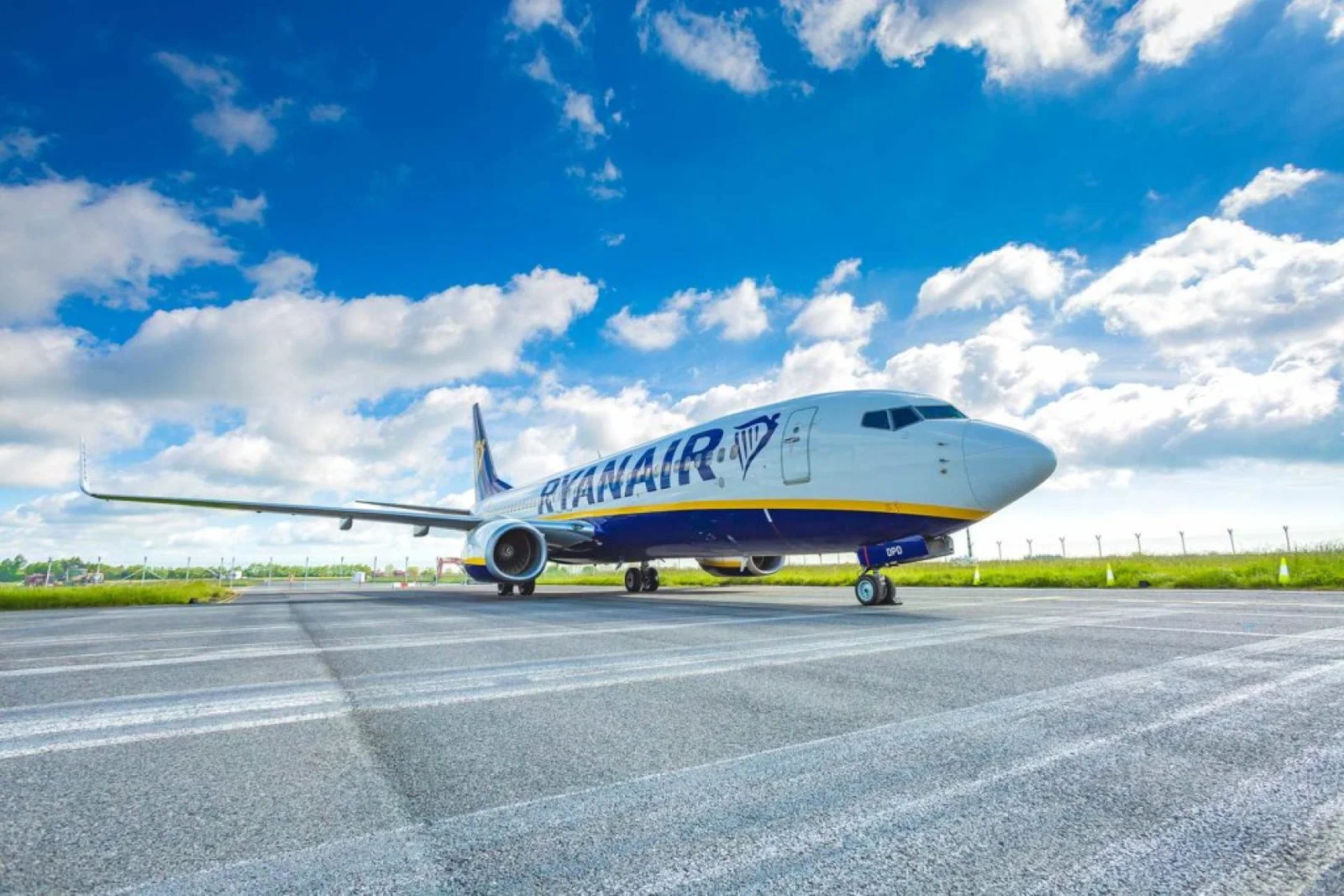
The budget carrier said 99% of its fleet was grounded from mid-March to the end of June, with Q1 passenger traffic down 99% from 42 million last year to just 500,000.
A record refund backlog also impacted operations and cash flow, said Ryanair, although the airline says it now expects more than 90% of cash refund requests to be cleared by the end of July.
It has also enacted on various "cost reduction" measures, including negotiating "modest" pay cuts with staff, consolidating its route network and deferring all non-essential spending.
"The past quarter was the most challenging in Ryanair’s 35-year history," the carrier admitted in a Q1 (three months to 30 June) trading update issued on Monday (27 July).
Ryanair’s Q1 revenue fell 95% year-on-year from €2.3 billion (£2.1 billion) to just €125 million (£115 million), while profit after tax fell from €243 million (£220 million) to a €185 million loss (£170 million).
Aircraft and crews were retained via skeleton operations to repatriate passengers, operate rescue and medical emergency flights, and ship and distribute PPE across Europe.
From 1 July, Ryanair has been aiming to operate 40% of its normal schedule, with plans for this to rise to 60% in August and 70% in September. However, it expects full-year 2020/21 traffic to fall 60% from 149 million passengers to 60 million, albeit while creating opportunities to evolve and grow the business.
"Many other airlines are cutting capacity, with the result that air travel in Europe is likely to be depressed for at least the next two or three years," said Ryanair. "This will create opportunities for Ryanair to grow its network, and expand its fleet, to take advantage of lower airport and aircraft cost opportunities that will inevitably arise."
The carrier is in discussions with aircraft suppliers to cut lease rates and purchase prices to reflect the Covid trading environment.
Subsidiary Lauda, said Ryanair, was forced to implement a "deep and painful" rescue plan, which involved cutting its fleet from 38 aircraft to 30, cutting roles in Austria and Germany, and closing its Stuttgart base. Without these measures, Lauda would have been forced to close its main Vienna base, according to Ryanair.
Ryanair’s new Boeing 737 Max fleet is now more than a year behind schedule, but it is hoping to take delivery of its first Max by the end of the year, and up to 40 by next summer.
It says it remains committed to the model, despite its long grounding owing to two fatal crashes in just five months in October 2018 and March 2019, killing 346 people.
During the coronavirus crisis, Ryanair has sought to save cash by cutting costs, cancelling share by backs and deferring all non-essential capital expenditure. It will also complete the sale this winter of seven of its oldest Boeing 737 aircraft.
The carrier still forecasts significant challenges arising from Brexit, particular in the event of a no-deal scenario. "We expect adverse trading consequences to arise," said Ryanair in its trading update.
Looking further ahead, Ryanair believes full-year 2020/21 will be "very challenging" for the group owing to the many unknowns presented by the coronavirus crisis, most notably how long the pandemic will persist and whether there will be a second wave of coronavirus infection.
"Hopefully EU governments, by implementing effective track and tracing systems, and EU citizens by complying with recommended face masks, rigorous hand hygiene and other measures, will avoid the need for further lockdowns or restrictions on intra-EU flights" said Ryanair.
"It is vital European economies begin the process of recovery this summer to minimise the damage arising from the Covid-19 pandemic, and this recovery can only be led by intra-EU air travel which is the engine of EU growth and economic activity."